
Meet James, if we are being formal
The skull’s name is James. Most of the time he goes by Skully, which seems fair because he is a skull and none of us are being paid by the hour to make this complicated.
The original idea was simple enough: build a Halloween display that could do more than repeat the same handful of recorded lines until the neighbors learned them by heart. Skully ought to notice when somebody is nearby, look their way, move his jaw, make the occasional comment, and carry on a conversation when the mood strikes him.
Naturally, a simple idea like that has grown arms and legs. Not literal ones yet, thank goodness.
He has also started becoming an actual character instead of a speaker mounted behind a plastic face. He knows he is a skull. He is sarcastic, a little suspicious of witches, and has enough of a history to explain why he talks the way he does without turning the journal into the collected memoirs of a dead sailor.
First, make the bones move
Before Skully gets clever, he has to move without stripping a servo, tying his own wires in a knot, or trying to turn his head like an owl.
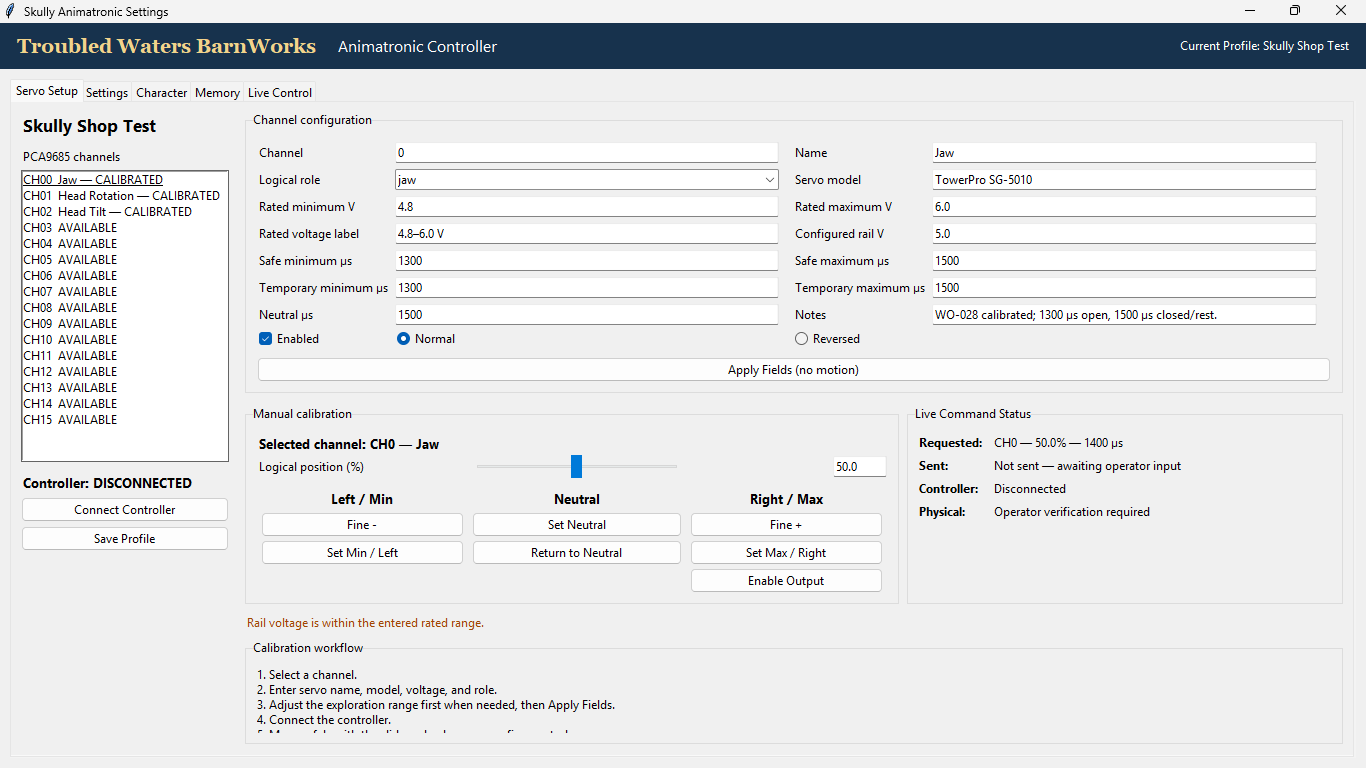
The current controller work has the jaw, head rotation, and head tilt channels calibrated. Each one has a name, a servo model, a safe operating range, a neutral position, and manual controls for creeping up on the limits instead of discovering them at full speed with a loud plastic crack.
There are more channels waiting for whatever comes next. That may eventually include other motion, but an empty channel is not a promise. It is just an empty chair at the table, and this project already has enough guests arriving without invitations.
I have also tested the Light-O-Rama ServoDog controller with the skull servos. That matters because Skully is meant to live inside the existing Halloween display, not sit off in a corner doing his own unrelated haunted-house routine.
More than three servos and a bad attitude
Movement is only one part of the plan. The eyes are supposed to light up. Sensors need to tell him when somebody is nearby. A microphone and speaker have to let him hear and answer. He should be able to interrupt and be interrupted instead of waiting politely through every sentence like a telephone menu.
During parts of the Halloween show, Light-O-Rama may give him scripted lines and cues. Between those moments, the goal is to let him mutter, make comments, or talk with whoever wandered close enough to become interesting.
That mix is important. A completely scripted prop gets predictable. A completely unscripted one can forget that the rest of the show is happening. Skully needs enough discipline to hit his marks and enough freedom to feel as though he is actually standing there with you.
The wooden display around him is growing in the same spirit. It uses rough shingle-like planks with routed edges and deliberate gaps. The current plan includes carved cracks with light behind them, while keeping the back from glowing like somebody left a work light on inside the coffin.
Cutting the cord to the shop computer
Right now there is still plenty of development machinery around the project. The long-term goal is for Skully to run without borrowing the computer I use to build everything else.
The AIPI-Lite direction has been set aside. ESP32-S3 boards and other control hardware are being tested, and the likely path is a combination: local hardware and local intelligence for the quick, ordinary business of being Skully, with OpenAI available when a conversation needs more than he keeps under his own hat. He does not own a hat yet either. The list grows.
That is still a direction, not a finished system. The sensors, lighting, voice, show timing, and self-contained computer all have work ahead of them. What changed this week is that the idea has begun to acquire real controls, real limits, and real decisions about how the pieces fit together.
Scary month has officially started
BarnWorks had a smaller job on the other side of the bench this week, teaching its plan reader to recognize useful information in another ordinary Windows-made document that did not arrange the table quite the way it expected. That repair matters, but it was not the story I kept coming back to.
The story was the controller screen with three calibrated channels and a name at the top: Skully Shop Test.
James is not alive. He is not finished. At the moment he is still a pile of plans, boards, electronics, servos, software, and an unreasonable amount of personality waiting to be assembled.
But October is here, and I am beginning to think this damn skull might actually wake up. 🔥💀